As the newest member of the program staff, I’m delighted to introduce myself and share my excitement about the work we do with our grantees here at the John A. Hartford Foundation.
My journey to the field of health and aging and to the Foundation started nearly a decade ago. Like many people who get involved in our line of work, my formative experience was very personal, in my case, losing my father. Reflecting on the circumstances that took him from the family sooner than we imagined led me to a path of personal inquiry into the area of health care for older adults. In time I came to understand how fragmented care delivery, ill-suited as it was to my father’s health and age, had cost us all dearly.
As I learned about the issues surrounding the care of older adults, I would discover the painful fact that my father’s trajectory and subsequent death might have been averted with coordinated care from an interdisciplinary team with expertise in geriatrics and gerontology. What we, his family, should have demanded was something that ought to be available without fail to all elderly patients with multiple comorbidities. Of course, that need is complicated by the reality that patients and families in complex and stressful circumstances don’t always have time to study their options; that too few institutions promote a holistic view of patient care; and that, as followers of the Foundation know too well, there are too few physicians, nurses, and social workers with such training.
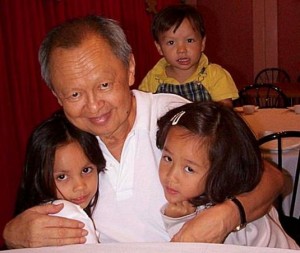 My family’s loss is a fresh reminder to me of the crucial importance of the John A. Hartford Foundation’s mission.
Personally, Papa’s experience started a thought process that led me to graduate studies in public health, which I pursued while working. Professionally, I was shifting from investment research to corporate planning with the view to create, rather than assess, future value. I went to work at Weight Watchers (an education company focusing on diet, nutrition, and health and wellness). There, I learned a great deal about grassroots health promotion, how it can be replicated and organized on a national scale, and how it can be marketed commercially to advance a public health goal.
The timing of my shift from Wall Street to Weight Watchers coincided with the lead-up to health reform. Given the public conversations around access, cost, and quality at the time, I became convinced that the demographic pressures of an aging population would one day require the health care system to deal with the needs and vulnerabilities of older adults. The opportunity to contribute to the radical changes needed would, I felt, be a fitting way to honor my father. After completing my studies, I was invited to take part in developing an innovative, grant-funded program for the patients of the geriatrics division of a leading hospital in Brooklyn.
With my background in business, I can readily appreciate the Foundation’s disciplined and thoughtful approach to strategic investment and oversight. Our work with grantees seems to me to provide an example of philanthropy as an effective engine of innovation and social change. Since its first grants in health and aging nearly thirty years ago, the Foundation has been a major force in increasing the nation’s capacity to provide effective and affordable care for elders. It has done so by committing funds to develop and utilize human capital and organizational knowledge; and it has done so through a process that builds on past learning and engages the collaborative effort of individuals across multiple disciplines. That the Foundation has pursued its mission with a long-term view of social change is a credit to its governance, vision, and leadership. I know from experience that this work is vitally important and that there remains plenty to do. For these reasons, I am excited to be a member of the team and I look forward to advancing our mission in partnership with grantees and other stakeholders in the field of health and aging.