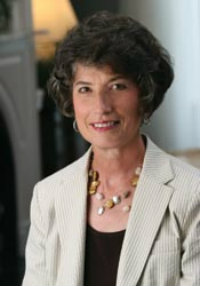
 Ann Kolanowski, PhD, RN, FAAN, the Elouise Ross Eberly Professor of Nursing in the School of Nursing at Pennsylvania State University, received the 2012 Doris Schwartz Gerontological Nursing Research Award at the recent meeting of the Gerontological Society of America’s (GSA) Nursing Interest Group in San Diego.
Casey Shillam, PhD, RN, chair of the Building Academic Geriatric Nursing Capacity (BAGNC) Alumni, spoke with Kolanowski about her experiences in her development as a nurse researcher and leader. Kolanowski, who is also a professor of psychiatry in the College of Medicine and directs the Hartford Foundation-funded Hartford Center of Geriatric Nursing Excellence, offered some valuable advice for BAGNC Alumni as they transition as a part of the National Hartford Centers of Gerontological Nursing Excellence to the GSA.
BAGNC: In your lecture at GSA, you told a wonderful story of being guided in your career both by great nurse scientists as well as powerful patient interactions. Can you briefly share with us the most influential aspects of your work in improving behavioral health in the nursing home?
Kolanowski: During the 1980s, when I was practicing in nursing homes, we didn’t know what behavioral interventions were about and relied heavily on physical and chemical restraints when residents became restless or agitated. This practice seemed so de-humanizing to me, particularly when wandering patients just wanted to go home! Then, in the 1990s, we began to do research on the effectiveness of non-pharmacological interventions. One resident in particular always reminds me of the importance of this work. She was a very isolated patient, and she seemed so down. When we looked at her past personality, she was incredibly introverted and emotionally sensitive. We designed an activity specifically for her with a cube that listed different emotions on each side. We would then connect with her in one-on-one interactions by rolling the cube and asking her what made her feel the emotion that emerged on the top of the cube. This really opened her up and she began to really share some herself. We were finally headed in the right direction!
BAGNC: With such an impressive “web of influences” in your career, how would you describe the way in which you were mentored and guided throughout your development?
Kolanowski: In The Growth and Development of Nurse Leaders, Dr. Angela McBride shares the concept of mentoring across the career: We need different mentors at all stages. Different mentors helped to develop different aspects of my career. The consistent theme is that I always picked the best mentor! For example, Laurie Gunter was a valued mentor in my master’s program. She shared her struggles as an African American woman studying for her PhD at the University of Chicago. Her take-away message was to always have the stick-to-it-ness and the confidence in moving forward regardless of any set-backs you may encounter. This was a very powerful influence for me early on. Of course, Carol Hoskins, Lois Evans, and Neville Strumpf helped me learn to think critically and develop skills around research that is humanistic and promotes the quality of life of older adults. And now my colleagues are my mentors. Together we are learning how to implement what we’ve discovered in practice. My students are also great teachers to me; their ideas inform my thinking daily. This is truly a lifetime endeavor, so you must take advantage of all the opportunities you have throughout your career.
BAGNC: Can you think of some key moments in your career that were pivotal in your evolution as a nurse leader?
Kolanowski: We have arrived at a time in our profession when we are finally able to systematically mentor leaders into the discipline of gerontological nursing research. When I was coming up the ranks, there wasn’t the critical mass that we now have. My entry into leadership came out of the blue while I was a master’s-prepared faculty member at a small teaching institution. In 1980, my department chair wrote a Health Resources and Services Administration grant to infuse gerontological content into the curriculum and asked me to be the Project Director for that grant. The 8-credit clinical course on “Care of The Older Adult” that was developed is still in place today, and received the Hartford award from American Association of Colleges of Nursing for curricular innovation. I had no idea how influential that experience would be, but it really did launch my academic career. And today I am grateful for the evolving leadership positions I’ve held as the director of the Hartford Center for Gerontological Nursing Excellence at Penn. It’s connected me at the national level to the best schools, students, and faculty to make an even greater impact on improving the care of older adults.
BAGNC: Over the past 12 years, the BAGNC program has awarded more than 240 scholarships and fellowships. As BAGNC Alumni continue in our own evolution as nurse leaders, we are launching our strategic planning initiative to define our role in the National Hartford Centers of Gerontological Nursing Excellence at the GSA. What advice do you have for us as we make this transition?
Kolanowski: You are at such a wonderful point in the history of the John A. Hartford Foundation and the National Centers for Gerontological Nursing Excellence to really move gerontological nursing to the next level! Nursing is on a par with other disciplines, and we are viewed as equals in creating science. My advice to alumni is to use your network of Hartford colleagues, but also reach out to interdisciplinary colleagues at the GSA. Take advantage of the interdisciplinary opportunities within the GSA to influence research and policy. BAGNC Alumni are well-positioned to transition into the GSA network and into leadership positions, ensuring that the nursing perspective on issues related to the care of older adults is heard.
BAGNC: What is your greatest hope for continuing improvement in the care of older adults?
Kolanowski: My greatest hope is that the care of older adults will continue to improve! I hope that we continue to attract the best and the brightest people into gerontological nursing. These nurses are our future!