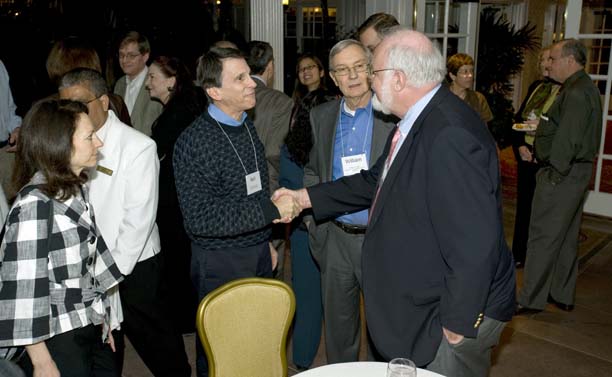
Last month, the Foundation hosted a meeting of heads of divisions of geriatric medicine from around the U.S. as part of our leadership grant to the Association for Academic Geriatric Programs (ADGAP). This annual meeting is an expression of one of the "non-monetary" powers of foundations to convene a field and help build capacity and connections among participants. Over time, I have really come to believe in the power of networking, connecting, and communicating.
One benefit of the sharing of ideas is occasionally one comes away on fire with a new perspective, motivation revving, and ready for action. At this year's meeting, an idea that really fired my imagination is that fundraisers turn money into meaning. Donors are really looking to use their money to buy a sense of purpose and meaning in life, and they are shopping for the most meaning at the best price.
Joe Golding, Chairman and CEO of Advancement Resources, stimulated this thinking in the last presentation of the ADGAP meeting, which focused on cultivating donors in support of geriatrics programs.  One notion that really captured me at the time--and has left me a little concerned after I sobered up from my new idea "binge-ing"--is that to be attractive to donors, a fundraising challenge needs to be like Jim Collins' B-HAG--A Big Hairy Audacious Goal. The speaker from Advancement Resources noted JFK's challenge to put a man on the moon as an example. This kind of vision, he said, is what can draw people into working to create a different future, into seeing the meaning in their efforts.
So what does it mean that geriatric care has had relatively little success at big fundraising? Clearly, the vision of curing cancer or heart disease can engage donors large and small. It gives them a sense of participating in a grand challenge and provides a sense of meaning to their contributions. In contrast, I wondered if our vision in geriatrics is too small. Are we failing to articulate it boldly enough, in a way that is compelling or persuasive?
How can we convey to others the grand challenge and the sense of purpose and meaning in improving health care for older adults? How can we convince others that improving care for our parents and grandparents is as important to a better America as improving care for children? How should we describe the Big Hairy Audacious Goal of geriatric care? What do you think?