I am particularly delighted to announce that two individuals with whom the Hartford Foundation has enjoyed longstanding relationships have each received an award this year from The Gerontological Society of America (GSA), presented during GSA’s annual meeting. GSA is the nation’s largest interdisciplinary organization dedicated to the field of aging. This year’s meeting was held November 18-22 in Atlanta, Georgia.
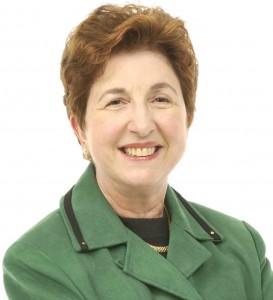 Barbara Berkman, DSW, PhD, received the Donald P. Kent Award for exemplifying “the highest standards for professional leadership in gerontology through teaching, service, and interpretation of gerontology to the larger society.”
Barbara is the Helen Rehr/Ruth Fizdale Professor of Health and Mental Health at the Columbia University School of Social Work, an adjunct professor in the Department of Community and Preventive Medicine at the Mount Sinai School of Medicine in New York, NY, and a visiting research scholar at Boston College. She is also the principal investigator and director of the John A. Hartford Foundation’s Geriatric Social Work Faculty Scholars Program.
Additionally, Barbara is a GSA fellow, which represents the Society’s highest class of membership, and she is the author of the renowned Handbook of Social Work in Health and Aging. Over her career, she has directed 27 federally funded and foundation-supported research projects focusing on issues in health and aging.
 Dr. Eric A. Coleman, a former Beeson Award recipient, received this year’s Maxwell Pollack Award for Productive Aging. The award recognizes instances of practice informed by research and analysis, research that directly improved policy or practice, and distinction in bridging the worlds of research and practice.
Dr. Coleman has made numerous contributions to the field, such as his work on group health care visits, and more recently, a broad program of descriptive research, policy research, advocacy, and clinical intervention development that, with funding from the Hartford Foundation, resulted in the Care Transitions Intervention. So far, more than 100 organizations have adopted this program.
Dr. Coleman has also worked behind the scenes to improve care for older adults. For example, he has successfully undertaken the difficult task of creating a National Quality Forum–approved measure of quality for care transitions. This long and complex process is a key enabler of real regulatory and policy change. As part of this work, Dr. Coleman has testified before the Senate and commented on policy and position papers for congressional staff and members.
Our congratulations to both of these extraordinary individuals!