A common complaint about philanthropy is that it lacks the focus and patience to provide sufficient resources over enough time to have a realistic chance of achieving social change. In other words, in the garden of social innovation we are accused of sprinkling our resources too lightly, producing a garden full of stunted, dwarf innovations that lack the reach and depth to match our social needs.
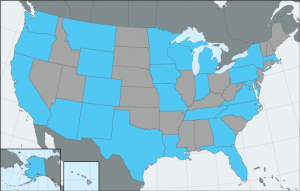
 Therefore, it is a proud moment to be able to report that after more than 12 years of work, Project IMPACT, the primary- care-based model of depression treatment that doubles the benefits of usual care, has graduated the 3,500th person from its series of training workshops. The map below shows in blue the states where the project team, led by Jürgen Unützer at the University of Washington, have planted their model.
It seems only yesterday that we set “stretch” goals for the dissemination effort, including making contact with 1,000 potential adopters, engaging 500 in serious consideration of implementing the model, and yielding 250 to actually make change. The experience of the IMPACT team has taught us all a great deal about the realities of moving even from highly applied health services research to widespread change in how health care professionals provide routine care. We expect to be able to apply these lessons in our own future grantmaking and in the emerging national conversation swirling around the concepts of dissemination, implementation, scale-up, and transfer.
We would also love to hear from other foundations and grantees: What strategies helped you successfully disseminate your programs?