Today I write from (unsurprisingly) damp Seattle, where I and many of my colleagues are enjoying half a week of high-level thinking on aging issues at the American Geriatrics Society (AGS) Annual Meeting. The theme of this year’s meeting is “Patient Safety and Quality: What Geriatrics Has to Offer.”
Patient safety is a particularly important topic. Older adults, as the primary users of the health care system, are particularly at risk, in part because they are particularly vulnerable to the weaknesses of the current system – things like medication errors and fragmentation of care. The meeting will naturally highlight the recent release of the revised Beers criteria for inappropriate medications for older adults, something we are very proud to have supported.
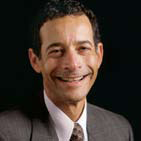 This morning, UCLA’s Hartford Center of Excellence in Geriatric Medicine director and long-time grantee David Reuben spoke on this topic during a lecture entitled, “Quality, Safety, and Cost: What Health Care Can Learn from Geriatrics.” He was awarded the lectureship as part of AGS’s 2012 Edward Henderson Award, given annually to an outstanding geriatrician.
 Dr. Reuben will receive the award Friday morning during the plenary ceremony, which will also honor numerous other John A. Hartford Foundation friends and grantees. Joseph Ouslander, MD—a former Center of Excellence Director and one of Atlantic Philanthropies’ Health and Aging Policy Fellows--will receive the Nascher/Manning Award, recognizing his distinguished, life-long achievement in clinical geriatrics. His selection is particularly appropriate for a meeting focused on patient safety. Among his recent achievements is the creation of the INTERACT tool (Interventions to Reduce Acute Care Transfers). The tool helps nursing home staff identify and manage health problems in their patients, reducing the need for hospitalizations. Fewer hospitalizations mean less harm and less cost—a win-win for patients and payers.
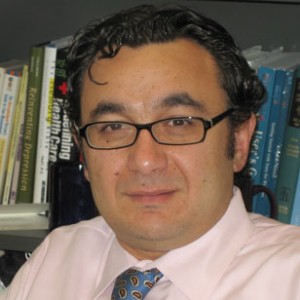
Malaz Boustani, MD, MPH, a faculty member at Indiana University’s Center of Excellence and Beeson Scholar, will also be honored with AGS’s Outstanding Scientific Achievement for Clinical Investigation Award. Dr. Boustani’s work, focusing on developing assessment tools and treatment approaches for dementia and delirium, has improved the performance of healthcare providers and systems. Delirium, often misunderstood by health professionals, is a usually reversible state of disorientation and confusion that is all too common among hospitalized older patients. Left untreated, it can lead to reduced quality of life, inappropriate medications and treatment, or premature placement in a nursing home.
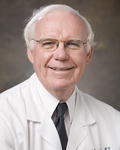 All of the awardees supported by Hartford are, happily, too numerous to mention here. However, I would like to highlight Leo Cooney, MD, who will receive the Dennis W. Jahnigen Memorial Award. Named for Dennis Jahnigen, MD, an extraordinary teacher and compassionate clinical geriatrician, this award is given annually to an AGS member who has shown outstanding leadership in and dedication to geriatrics education. Dr. Cooney, a faculty leader at our Yale Center of Excellence, has played a role in training numerous geriatricians. He also believes in the importance of training all specialists in the care of older adults in order to provide the best possible care to older patients.
I believe that geriatrics education—both for specialists and generalists—can be part of the solution in improving patient safety. Geriatrics is characterized by careful attention to the whole patient, consideration of patient goals, use of evidence-based medicine, and avoidance of overtreatment. If we can distill those qualities into the health care system as a whole, we can improve the health care experience for all patients.