I sometimes wonder why anyone in the world goes into academic medicine and research. The grueling years of training, the barrage of rejection that comes with submitting grants, the pressures to “publish or perish,” the never-ending balancing act between time in the lab, classroom, clinic, and--oh, yeah--home, where family and friends await patiently (hopefully).
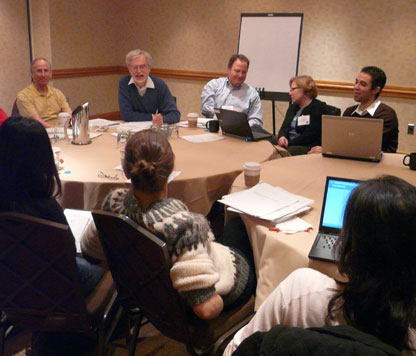
And this is from an outsider’s perspective. I can’t begin to claim a true understanding of the pressures that early investigators in medicine and other health professions face. Yet then I see firsthand the passion and perseverance of researchers I meet in the field of aging, like those at last week’s meeting of the T. Franklin Williams Scholars.
These career development award winners are junior faculty in the subspecialties of internal medicine, whose research will advance the care of older adults through work on internal organs (cardiologists, pulmonologists, nephrologists, etc.), infectious diseases, oncology, and other vital areas. These physicians, educators, and researchers are creating vaccines that really work in older adults (most are tested and effective on the young and healthy). They work to understand and find treatments for unexplained diseases like idiopathic pulmonary fibrosis that disproportionately affect the 65+ population. They are finding the differences that matter between the young and old in the care of kidneys and hearts. They then pass this knowledge on to future generations of doctors.
Surely, these aging-focused physician scientists are similar to others, but a part of me believes this group is special. Is the research more personal? So many have stories about their grandparents or other loved ones who needed better care at the end of their life. Is it that the potential impact is so huge? With the burgeoning elder population, the potential for high impact is hard to ignore. Whatever the reason, this meeting organized by alumni of the scholarship program served as a testament to the zeal and tenacity of these young faculty who are doing everything they can to develop their careers so they can focus on the research they love.
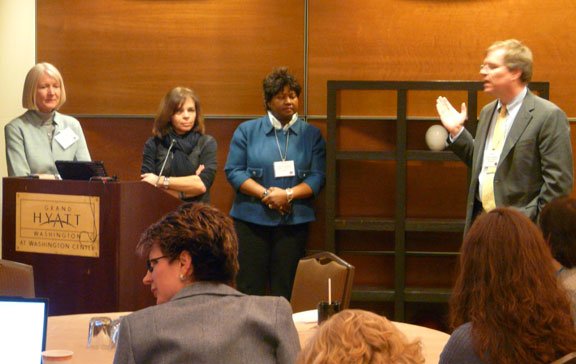
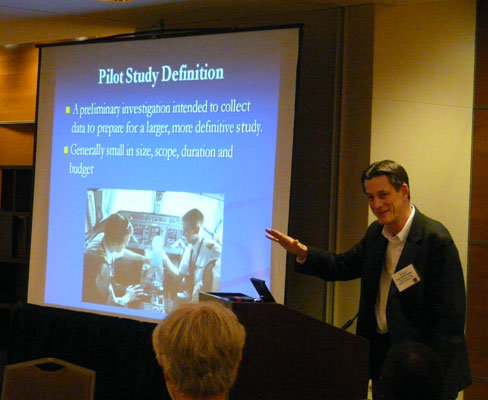
Part of the meeting centered on practical items: what has changed in grant applications to the National Institutes of Health, how to design an effective pilot study, what kinds of private sources of funding are available. Representatives from the National Heart, Lung, and Blood Institute, National Institute of Diabetes and Digestive and Kidney Diseases, and National Institute on Aging (NIA) generously gave their time to present during the weekend retreat. The NIA’s Robin Barr and Chyren Hunter, Director and Deputy Director of the Division of Extramural Activities, respectively, once again showed their tremendous dedication to their institute’s mission. They participated from beginning to end and organized a mock study section so scholars could play the role of grant reviewers. They learned firsthand what kind of scrutiny their applications will receive--an invaluable lesson.
Beyond the important practical advice, the T. Franklin Williams Scholars received something special that comes from being a part of a program like this. Outstanding leaders in the field shared their life experiences, wisdom, encouragement, and comfort. They represented living proof that life in academic medicine and aging research is not only possible, but that a meaningful, joyful career is completely within each scholar’s grasp. This message was also coming from the scholars themselves. They support and learn from each other, forming a network to rely on when times are hard.
Again, these are an outsider’s perspective, but I believe it was clearly evident at this meeting. We should all be thankful for the past funding of the scholars by The Atlantic Philanthropies, and to the NIA for carrying the program forward in its new incarnation as the Grants for Early Medical/Surgical Subspecialists’ Transitions to Aging Research (GEMSSTAR). The John A. Hartford Foundation has been proud to support the Association of Specialty Professors and Alliance for Academic Internal Medicine to provide leadership development and support for the scholars, along with a larger grant program to fully integrate geriatrics into the specialties of internal medicine. We look forward to seeing these researchers and educators overcome their obstacles, rebound from rejection, and find creative ways to advance the care of older adults in their specialty areas.