
Innovative new website (Timeslips.org) offers families caring for a loved one with dementia tested and creative activities to help them connect, communicate
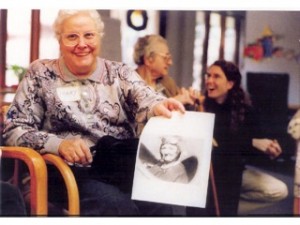
Most of the time, we have more bad news than good to share about delivering quality care to older people. Today, it is a joy to focus on a wonderful program that provides unanticipated blessings to older people and their caregivers: TimeSlips. TimeSlips is a creative storytelling project for people with dementia, created by Anne Basting, PhD, Director of the University of Wisconsin-Milwaukee’s Center on Age & Community.
The program uses photos and word prompts to inspire participants’ creativity. It provides a fun, low-pressure way for people with dementia to spark their imaginations, connect with one another and with caregivers and family members, and express themselves without worrying about embarrassing memory lapses or “wrong answers.” I have seen the TimeSlips program conducted at adult day centers, and I have seen participants and their caregivers glow with joy. For those who may have felt that it was nearly impossible to have meaningful communication with a loved one with dementia, this program proves that quality interaction is possible.
Recently, I learned that TimeSlips launched a new, free, interactive storytelling website, Timeslips.org. The launch took place at the annual conference of the National Adult Day Services Association. Anne Basting, the creator of TimeSlips, notes, “The new website provides a creative and positive way to take time off from focusing on the disease, and instead spend time growing, learning, even playing together. TimeSlips is a joyful experience that opens the power of storytelling to everyone by replacing the concern about memory with an opportunity to enjoy the power of imagination.”
I am reminded of Cory’s blog about her mother who has dementia (“Listening to My Mother”). In that blog Cory relates an incident with her mother, who said, “Don’t forget I’m here.” Cory went on to write, “That afternoon, I learned a great deal about the importance of intently listening to someone struggling with Alzheimer’s. My mother needed to know that I was genuinely interested in her questions and fears and that I understood her confusion and sadness. And likewise, it was important for me to show my caring and support.” By listening to the stories her mother creates through TimeSlips and sharing the experience, a daughter can show her mother that she knows she is still here and that she cares.
Caregivers and family members can go to the new website while sitting with a person with dementia and read, create, and share stories inspired by hundreds of images and questions in the site’s library of prompts. Or, family members or friends separated by distance can work online to write a story together.
Visitors can use Timeslips.org free and without training, although people who plan to use TimeSlips with groups of people with dementia in a variety of care settings are encouraged to get training. For more information, see http://www.timeslips.org/pages/train. The TimeSlips Creative Storytelling Project offers individual and organizational certification in the method.
TimeSlips, now accessible by website, is a gift for people who love someone with dementia. The program seems to work miracles for people with dementia. Their caregivers are always surprised and pleased with the effects they witness in their loved ones during and after a session. The people with dementia seem more engaged, relaxed, and content. I am going to pass along this good news to my cousins for my Aunt Anne, who I know will appreciate a new way to interact with her family despite her failing memory.