NASHP Brief: State Strategies to Support Working Caregivers
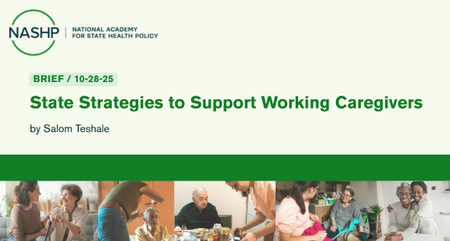
The National Academy for State Health Policy (NASHP) has released a brief, "State Strategies to Support Working Caregivers."
Most U.S. states — 38 plus the District of Columbia — support working family caregivers of older adults and people with physical disabilities through some form of public policy, including policy that helps private businesses support and retain working family caregivers. Federal policy, such as tax breaks and family and sick leave, can serve as a national baseline from which states can build caregiving policies.
The brief, written by Salom Teshale, includes data from AARP's LTSS Scorecard and AARP and the National Alliance for Caregiving's Caregiving in the US 2025 report to discuss the following topics:
- Why Are States Supporting Working Caregivers?
- States and Employers Can Work Together to Support Working Family Caregivers in Public-Private Partnerships
- State Outreach and Marketing to Employers
This brief aligns with Goal 4 of the 2022 National Strategy to Support Family Caregivers, “Ensure financial and workplace security for family caregivers.”
A related, recent NASHP brief, "Strengthening the Respite Care Workforce," notes how a robust and well-trained respite care workforce can help ensure caregivers have access to high-quality respite services. The brief explains how states can utilize the National Respite Care Provider Training (NRCPT) and workforce registries to strengthen their respite care workforce.
Read the State Strategies to Support Working Caregivers brief.
Read the Strengthening the Respite Care Workforce brief.
Learn more about NASHP.
Learn more about the 2022 National Strategy to Support Family Caregivers.
Learn more about JAHF's co-support of NASHP.