Can you tell us about your career journey and what led you to The John A. Hartford Foundation?
My first job out of college was at The John A. Hartford Foundation, and it really set me on a path. I started without really understanding what philanthropy is. We had two program areas, aging and health, and one called health care cost and quality. And I worked on the health care cost and quality area, which set me up for an understanding of both of those.
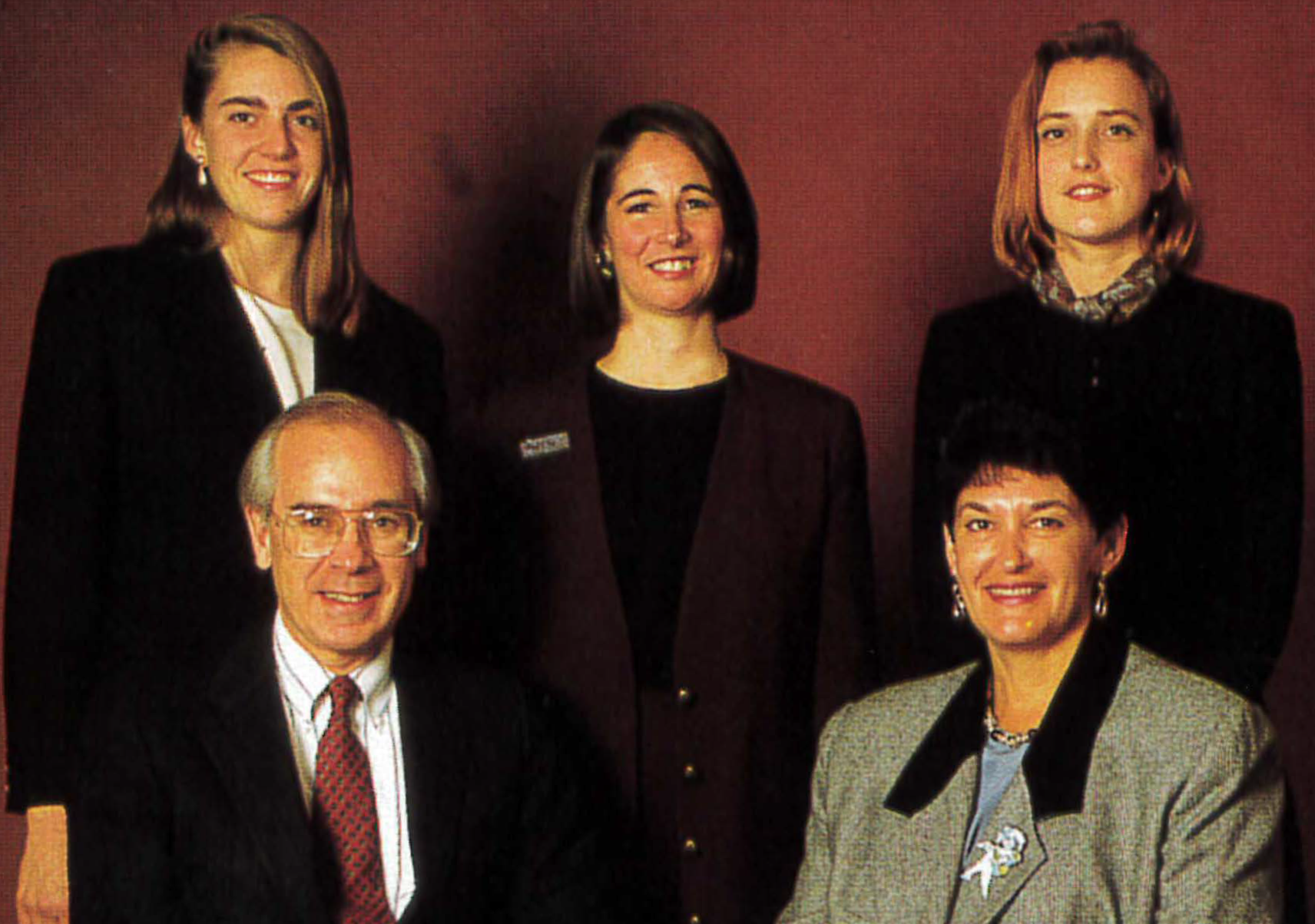
From there, I went to the Commonwealth Fund, and that was where I really started to focus on older adults. I then went to UCLA to do doctoral work in public health and health policy and was later recruited to another foundation, the Donald W. Reynolds Foundation, that focused on older adults as well. That set me up beautifully to come back home, as I call it, to JAHF, to do work that was even broader than what I had been doing—but built on both my expertise and the partnerships I'd had with other folks and JAHF for decades.
What’s your vision as you begin your tenure as president?
We have a lot of goals for the foundation. We're not slowing down at all. I want to further broaden and embed the Age-Friendly Health Systems work that we have been doing that has gone faster and further than I think we ever anticipated. I want to make sure that we get more into communities, in particular with our family caregiving work, because people are struggling with caregiving burdens and needs right now, and we need to meet them where they're at.
It's also really important to me that we not only continue to work with our current and long-term partners but also branch out and form new partnerships.
There are a lot of emerging issues that are top of mind for us, including rural health and the ways AI and other forms of technology can be used to help older people.
What’s next for the Age-Friendly Health Systems movement?
We're so excited by how far we've come already with Age-Friendly Health Systems, but there's a long way to go. We need to make sure that every older person gets the best care anywhere they get their care, in any setting. So we're interested in looking at ways to broaden the reach of the movement—get to more people, train more clinicians, make sure that more sites are truly offering age-friendly care. At the same time, we want to diversify our partners on this work while exploring opportunities in accreditation, payment and regulation.
Where do you see your work to support family caregivers heading?
There's so much need in and around the caregiving space. It's a bipartisan issue, so that's definitely a winner in this environment where partisanship can be problematic. I think we need to meet caregivers where they are. To paraphrase Rosalynn Carter, every one of us either is or has been or will be a caregiver or will need one, and that's increasingly true everywhere we look. So I would like to get more and more into communities to reach caregivers with the support they need.
You mentioned the universality of caregiving. What’s your caregiver experience?
I've had moments of caregiving, but I would not say that, at this point, I've really had to step into it in the big ways that can be most difficult for people. I'm really fortunate that both of my parents are in good health, but my dad has started to invite me into some of his clinical appointments so that I can understand what's going on. And I saw last year when my mom had a real health episode how hard it's going to be when we get there. Because when a person needs a caregiver, they are vulnerable, and none of us like to be vulnerable. There’s an added layer to the day-to-day and sometimes clinical work of being a caregiver that's very emotional.
What does JAHF have planned in its serious illness and end-of-life care work?
We've had a long-term focus on serious illness and end-of-life care. About a year ago, we did an assessment of the past 10 years of our work in the field. One of the things we’ve accomplished is building palliative care in hospitals. Now we're looking forward to some new work focused on improving access to palliative care in communities.
What do you love about your job?
I love having the ability to think broadly about where we're going to go next. I love our team. We have an amazing group of really mission-oriented people. I've also had a great opportunity to spend time not only internally with our team and our trustees, but also to meet individually with folks who are in the field and learn about what they're doing, what they're seeing, and where there may be future opportunities with new partners as well. I love knowing that every day when I come to work, we are building things that genuinely help older people and their families.
What’s something brand new we can expect from JAHF?
I’m thrilled that Susannah Bernheim will be joining us this month as Vice President for Program and Strategy. She’s a physician who most recently served as chief medical officer at the CMS Innovation Center, and she's going to bring fantastic experience and a whole new set of skills and expertise to our already fabulous staff.
I definitely have something up my sleeve for the coming six months—or really more like a year. I've been exploring some new opportunities for our programs, and I've been talking about wanting to bring some new voices into our work. So stand by. I think we'll have some exciting new things to announce in the coming months.
How do you spend your time outside of work?
In my personal life, it's all about young adults. My son recently graduated, and it's really been fun to see him launch into life as a young professional. My daughter is a junior in college who is a rower, and it was massively exciting to watch her and her team win at the Henley Royal Regatta in England this summer.
I also do a lot of reading and listen to a lot of podcasts. The kind of reading I do varies from fiction or history to books about what we should be thinking about in a business sense. I listen to quite an array of podcasts. Some are just for fun, some are more business related, and it turns out I listen to a lot of economics podcasts. I don't know why, but I realized that, after being in the car with me listening to those, both of my children have focused on economics in their college studies. I'm wondering how much of that I unintentionally set.
Is there anything else you want to share about yourself and your role at JAHF?
This is my life's work. This is what I want to be doing. I love both the work, and the people I’m doing it with.