KFF Issue Brief: What Could the Health-Related Provisions in the Reconciliation Law Mean for Older Adults?
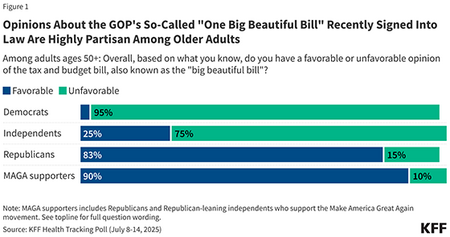
KFF has published an issue brief, "What Could the Health-Related Provisions in the Reconciliation Law Mean for Older Adults?" This brief was updated on September 17, 2025 to reflect language in the final bill enacted July 4, 2025.
The authors, Tricia Neuman, Alice Burns, Justin Lo and Matthew Rae, note that the budget reconciliation bill - previously known as “One Big Beautiful Bill Act” - includes several policy changes that could have significant implications for the health and health coverage of older Americans ages 50 and older, including those who are covered by Medicare.
The reconciliation law as enacted includes an estimated $911 billion in federal Medicaid spending cuts over the next 10 years, including several provisions expected to increase costs or eliminate coverage for Medicaid beneficiaries. Collectively, these provisions could affect the 22 million people ages 50 and older with coverage under the Medicaid program by reducing the number of people with Medicaid and reducing access to health and long-term care services for people who remain enrolled in the program.
The authors note seven health-related provisions to watch as provisions of the 2025 budget reconciliation law are implemented:
- New Medicaid Work Requirements
- Changes to ACA Marketplaces
- Placing a Moratorium on Implementation of the Medicare Savings Program and Medicaid Eligibility and Enrollment Rules
- Reducing Spending for Long-Term Care Services
- Ending Medicare Eligibility for Previously Eligible People with Lawful Immigrant Status
- Adding Work Requirements and Cutting Federal Spending for Supplemental Nutritional Assistance Program (SNAP)
- Modifying the Medicare Drug Price Negotiation Program to Delay or Exempt Certain High-Spending Drugs from Negotiation
Read the issue brief.
Learn more about KFF.
Learn more about JAHF's co-support of KFF.