
Terry Fulmer, PhD, RN, FAAN
President
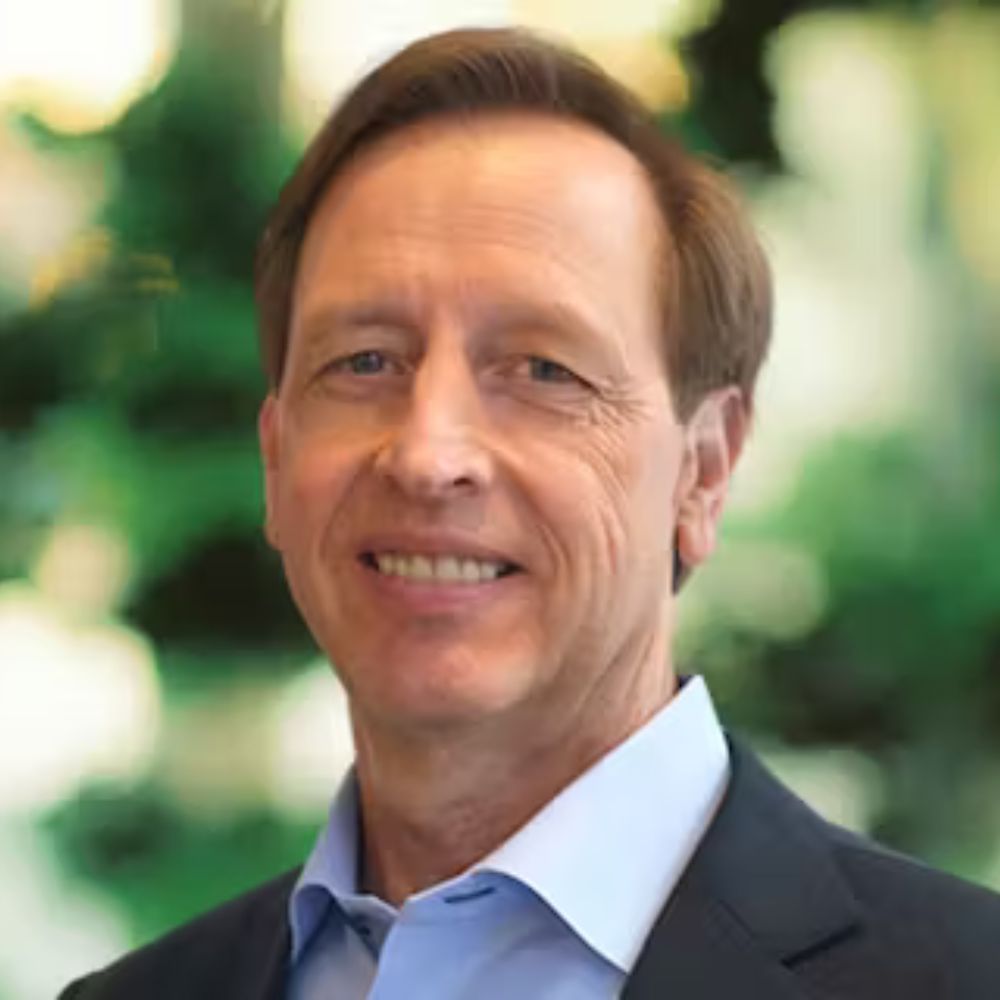
John R. Mach, Jr., MD
Chair
A Message From Our Leadership
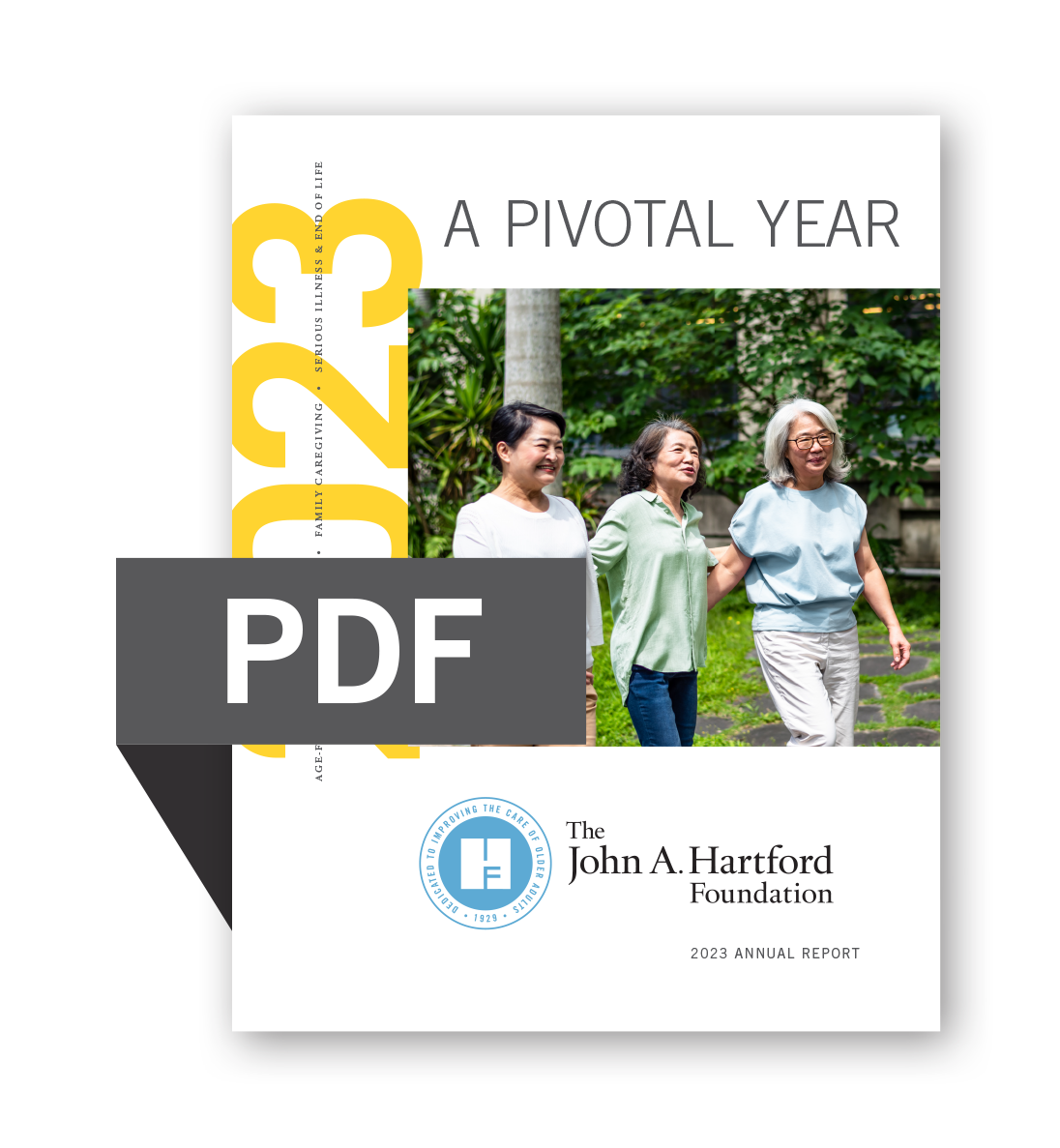
In our collective pursuit to improve the care of older adults, 2023 was a particularly pivotal year. We saw a pronounced shift from our pushing the concept of age-friendly care out into the world, toward a new dynamic where clinicians, caregivers and advocates are pulling it into every facet of their work.
This change did not happen overnight. It emerged from the hard work of our grantees and partners and was the result of numerous pivotal moments that transformed care for older adults. We saw innovations in policy and the delivery of evidence-based practices that support older adults and reinforce age-friendly care. We’re reflecting on some of those pivotal moments in this annual report.
Moving from inertia to action
Our commitment to increasing access to age-friendly care hit a milestone this past year. More health systems, nursing homes, retail clinics and other points of care across America offer age-friendly care than ever before. Today, more than 3,900 sites—including all MinuteClinics in CVS pharmacies and the entire U.S. Department of Veterans Affairs (VA) health system—have joined the movement.
Using the expertise of partners, we made the innovative age-friendly approach easier for health systems and partners to adopt. This expanded our cadre of champions who recognize the importance of providing equitable, evidence-based care to older adults. Now, we’re focused on an ongoing shift in providers’ mindsets, from not only treating an older adult’s diseases, but also addressing their function.
As more people live longer, our goal must be to help older adults live their most fulfilling lives by focusing on what matters to them. Care that helps older adults live, think, move and engage in their environment is essential for the well-being of society.
Building partnerships to optimize policy
In 2023, we saw an increase in the volume and depth of our work with federal agencies. Recognizing that influencing policy includes more than influencing legislation, we continued to strengthen relationships with our colleagues at federal agencies, such as the Administration for Community Living, Centers for Medicare and Medicaid Services (CMS), the VA and the Health Resources and Services Administration.
We believe good practice shapes smart policy, and we have showcased to federal policymakers how our evidence-based practices can inform policies that improve the lives and care of older adults. In 2022, building on years of work with our grantees, we hosted a roundtable and developed recommendations related to payment for comprehensive dementia care models. In 2023, the fruit of our collective labor was realized as CMS announced the Guiding an Improved Dementia Experience (GUIDE) model to test an alternative payment for comprehensive care for people living with dementia and their family caregivers. We are pleased that the partnerships we have forged are purposeful and productive, and built to withstand any shifts in politics.
Laying the groundwork for the future
While we are pleased with the massive momentum we’ve achieved, we know our work is far from done. New challenges, and others not yet solved, require us to continue to pivot, especially as we examine our work through the lens of health equity. This means that our incredibly dedicated and expert staff are always looking for ways to further increase access to age-friendly care for all older adults, regardless of who they are, where they live or their economic status.
We have begun exploring ways to address the effects of social isolation and loneliness on the health and well-being of older adults, and we have exciting new work with partners to ensure older people and caregivers in rural communities can access the supports and services they need. These efforts will continue to be grounded in the need to counter ageism and promote safe, equitable aging for all.
Our ability to identify and address the most pressing needs of older adults and those who provide care is a testament to the commitment of our Trustees. Their leadership has allowed us to be flexible and take advantage of time-sensitive opportunities. The Board continues to evolve and grow, and last year, we welcomed new members Ginna Baik, leader of Senior Living Alexa Smart Properties for Amazon, and Phyllis D. Meadows, PhD, MSN, RN, senior fellow with the Detroit Program at The Kresge Foundation.
Our Trustees and staff have our deep gratitude, as do our fearless partners and grantees who inspire us to think boldly and dream bigger. Thank you all for your willingness to work alongside us to improve the lives and care of older adults. We could not succeed without you.
|
|
 John R. Mach, Jr., MD John R. Mach, Jr., MDChair |
Age-Friendly
Health Systems
Pivotal Achievement:
Age-Friendly Care
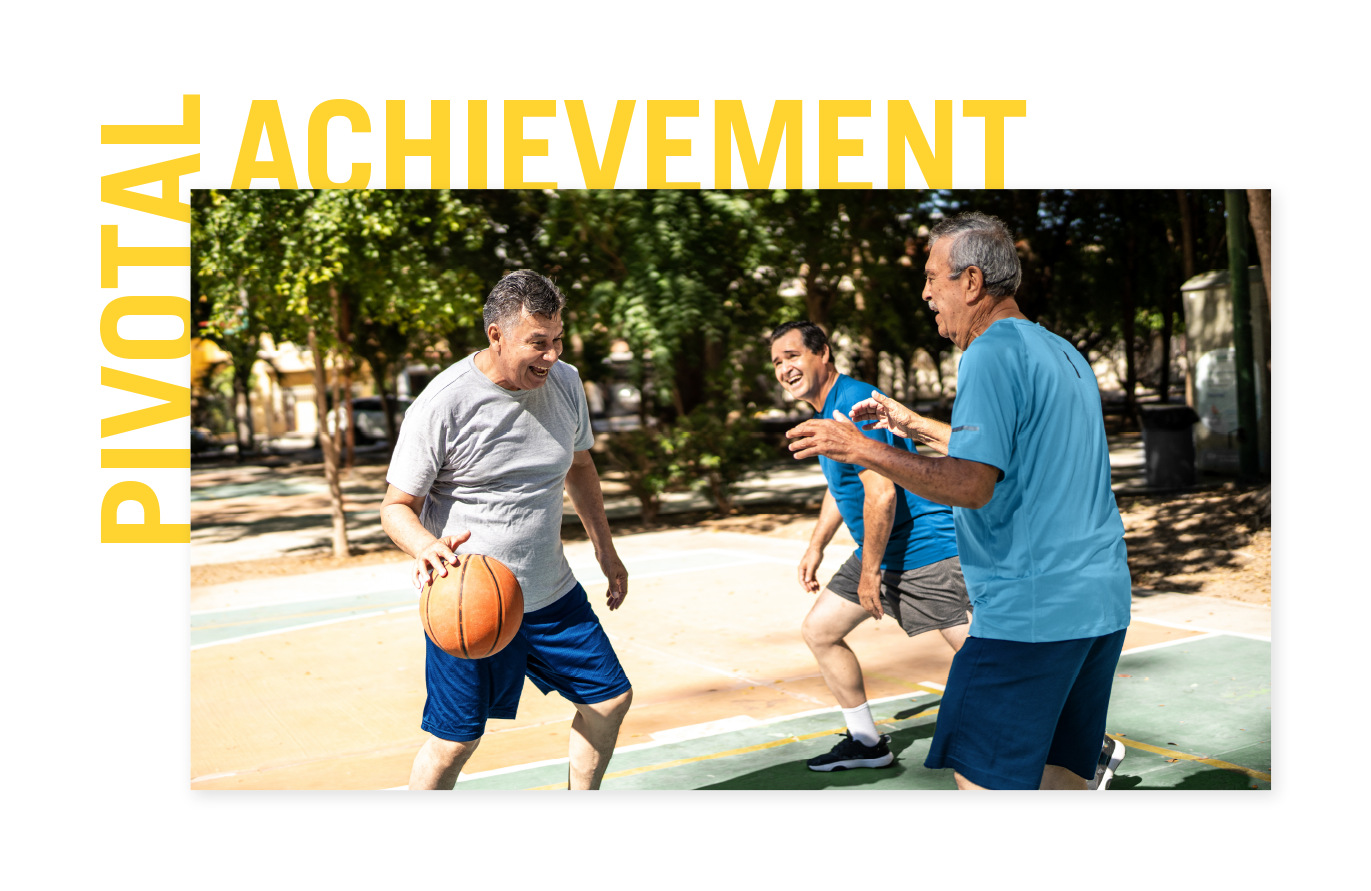
In 2023, the Age-Friendly Health Systems reached the milestone of more than 3,000 hospitals, practices, nursing homes, convenient care clinics and other settings embracing the 4Ms Framework to deliver care focused on What Matters, Medication, Mentation and Mobility.
This marks a proud and decisive moment in the movement’s advancement, both geographically and by setting, with older adults getting care that prioritizes what matters most to them.
Featured Milestones
The AARP Public Policy Institute releases the fifth edition of the Long-Term Services and Supports State Scorecard.
The American Academy of Home Care Medicine updates its national directory for home-based medical care.
The U.S. Department of Veterans Affairs champions age-friendly care for veterans.
Featured Milestones
The AARP Public Policy Institute releases the fifth edition of the Long-Term Services and Supports State Scorecard.
The American Academy of Home Care Medicine updates its national directory for home-based medical care.
The U.S. Department of Veterans Affairs champions age-friendly care for veterans.
Family Caregiving
Pivotal Change:
Dementia Care Payment
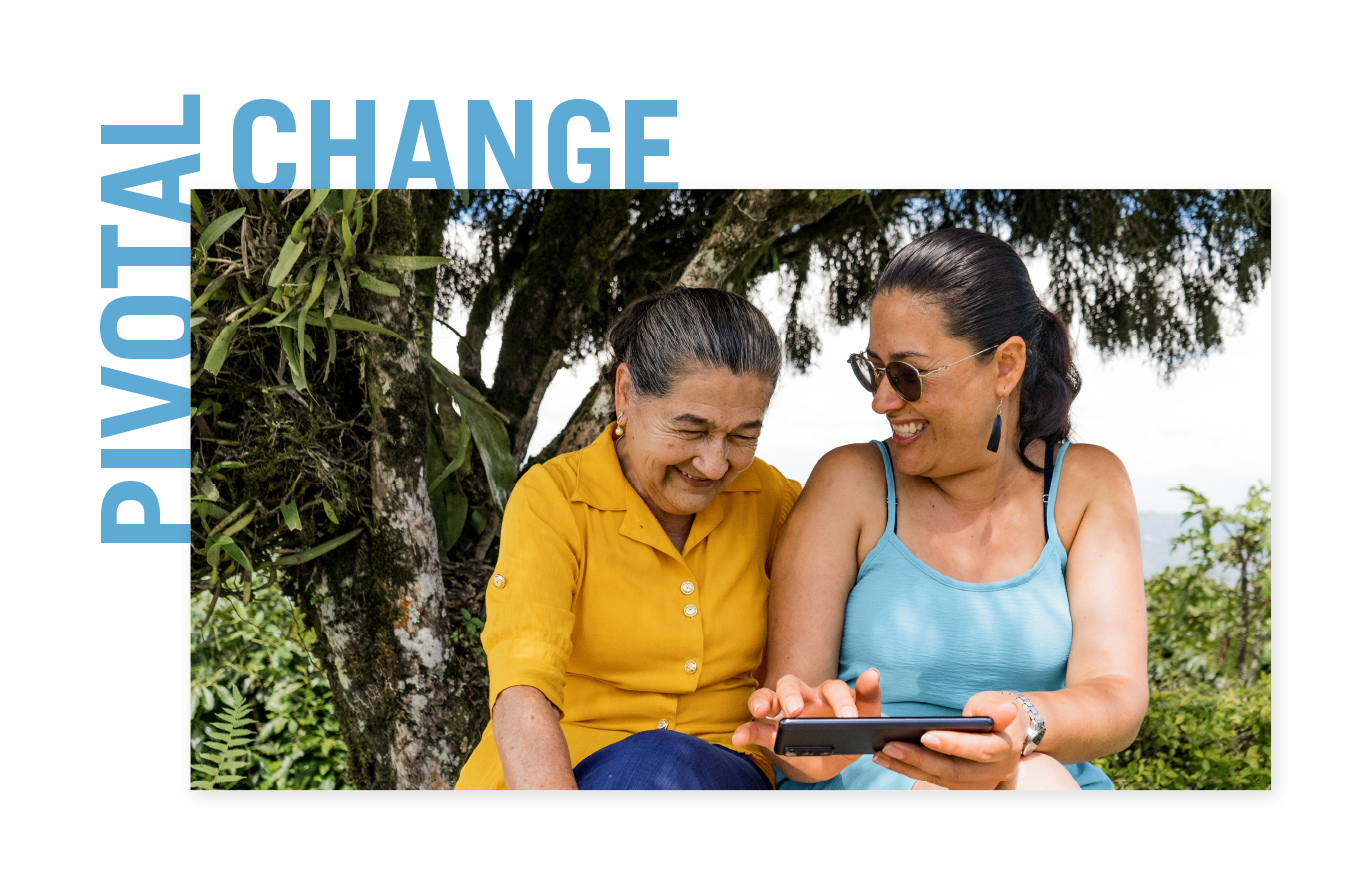
More than one in 10 older adults has dementia, causing them distress and challenges for their family caregivers, who often receive little formal support or guidance. JAHF supports the dissemination of the UCLA Alzheimer’s and Dementia Care program and other proven models, but previously, payment policy has gotten in the way.
In a groundbreaking shift, in part influenced by JAHF and grantees, the Centers for Medicare & Medicaid Services (CMS) announced the Guiding an Improved Dementia Experience (GUIDE) Model. It provides people living with dementia and their family caregivers with comprehensive services and support, which will be more widely available because of new Medicare payment options for clinicians.
Featured Milestones
CMS announces the GUIDE payment model for comprehensive dementia care.
FAIR Health launches a video to teach older adults how to use its shared decision-making and health care engagement tools.
The National Alliance for Caregiving organizes a Hill summit to engage, learn and advocate for key issues that affect caregivers.
PHI and the National Alliance for Caregiving advocate for solutions to the challenges direct care workers and family caregivers face.
The National Academy for State Health Policy unveils SupportCaregiving.org with resources to implement the National Strategy to Support Family Caregivers.
Next Avenue creates a special report on diverse caregivers and their unique needs.
Featured Milestones
CMS announces the GUIDE payment model for comprehensive dementia care.
FAIR Health launches a video to teach older adults how to use its shared decision-making and health care engagement tools.
The National Alliance for Caregiving organizes a Hill summit to engage, learn and advocate for key issues that affect caregivers.
PHI and the National Alliance for Caregiving advocate for solutions to the challenges direct care workers and family caregivers face.
The National Academy for State Health Policy unveils SupportCaregiving.org with resources to implement the National Strategy to Support Family Caregivers.
Next Avenue creates a special report on diverse caregivers and their unique needs.
Serious Illness and
End of Life
Pivotal Learning:
Serious Illness Care Conversations
JAHF’s Age-Friendly Insights poll revealed that people in the United States overwhelmingly want palliative care once the concept is explained to them, but many do not know what this interdisciplinary specialty is or how to access its services that help people live well with serious illness.
This is a strategic insight, that when combined with evidence-based messaging tools developed by JAHF grantees, can help providers across all care settings explain care options so older adults and their families can make informed decisions.

Featured Milestones
The Center to Advance Palliative Care develops training courses as part of the Age-Friendly Health Care Learning Pathway.
The National Academies of Sciences, Engineering, and Medicine hold a workshop on advancing serious illness care research.
The National Academy of State Health Policy disseminates a resource guide on palliative care for state officials.
Featured Milestones
The Center to Advance Palliative Care develops training courses as part of the Age-Friendly Health Care Learning Pathway.
The National Academies of Sciences, Engineering, and Medicine hold a workshop on advancing serious illness care research.
The National Academy of State Health Policy disseminates a resource guide on palliative care for state officials.
Grants
We funded a robust roster of 20 new grants totaling $26,594,426 to improve the care of older adults. The Foundation made $23,842,647 in payments to existing grants in 2023.
New Grants in 2023
View Grants Awarded by Quarter
First Quarter 2023
Case Western Reserve University
Age-Friendly Health Systems: Ambulatory Care Continuum Evaluation, Scale-up and Spread
$2,557,149
FAIR Health
National Initiative to Advance Cost Information in Shared Decision-Making for Older Adults with Serious Health Conditions: Phase II Implementation Project
$1,832,042
Grantmakers In Aging
Core Support Renewal: Building an Aging Philanthropy Movement
$385,344
Icahn School of Medicine at Mount Sinai
Moving Hospital at Home into the Mainstream of Health Care Delivery, Addressing Health Equity and Supporting Family Caregiving
$2,180,678
PHI
The Family Caregiver and Direct Care Workforce Initiative
$374,599
Trust for America’s Health
Phase III: Nationally Embed and Sustain Age-Friendly Public Health Systems, Policies and Practices
$2,801,756
Second Quarter 2023
Council of Medical Specialty Societies
Promoting Diagnostic Excellence Across the House of Medicine
$100,000
Generation Entertainment
Why Survive: Being Old In America Documentary Film
$698,220
Health Careers Futures, Jewish Healthcare Foundation
Revisiting Teaching Nursing Homes, Phase II: Disseminating Across Pennsylvania
$3,333,033
National Academies of Sciences, Engineering, and Medicine
Forum on Advancing Diagnostic Excellence
National Academy of Medicine Scholars in Diagnostic Excellence
$390,795
University of California, San Francisco
Launching and Empowering a National Age-Friendly Health Systems Research Community
$2,513,540
Society to Improve Diagnosis in Medicine
Diagnostic Excellence Age-Friendly Health Systems Seed Grants Program
Fellowship in Diagnostic Excellence Program
$700,007
Third Quarter 2023
American Geriatrics Society
Geriatrics Workforce Enhancement Program Coordinating Center, Phase III
$2,902,606
National Academy for State Health Policy
RAISE 2.0: The RAISE Act Family Caregiver Implementation and Technical Assistance Center
$2,385,669
Fourth Quarter 2023
American Society of Consultant Pharmacists
Leveraging Pharmacists as Age-Friendly 4Ms Champions
$1,888,988
Benjamin Rose Institute on Aging
Dissemination of the Consumer Version of Best Practice Caregiving
$450,000
Center for Health Care Strategies
Development of the Better Care Playbook, Phase VII
$200,000
Education Development Center
Rapid Dissemination of Evidence-Based Comprehensive Dementia Care Models
$900,000
Financial Summary
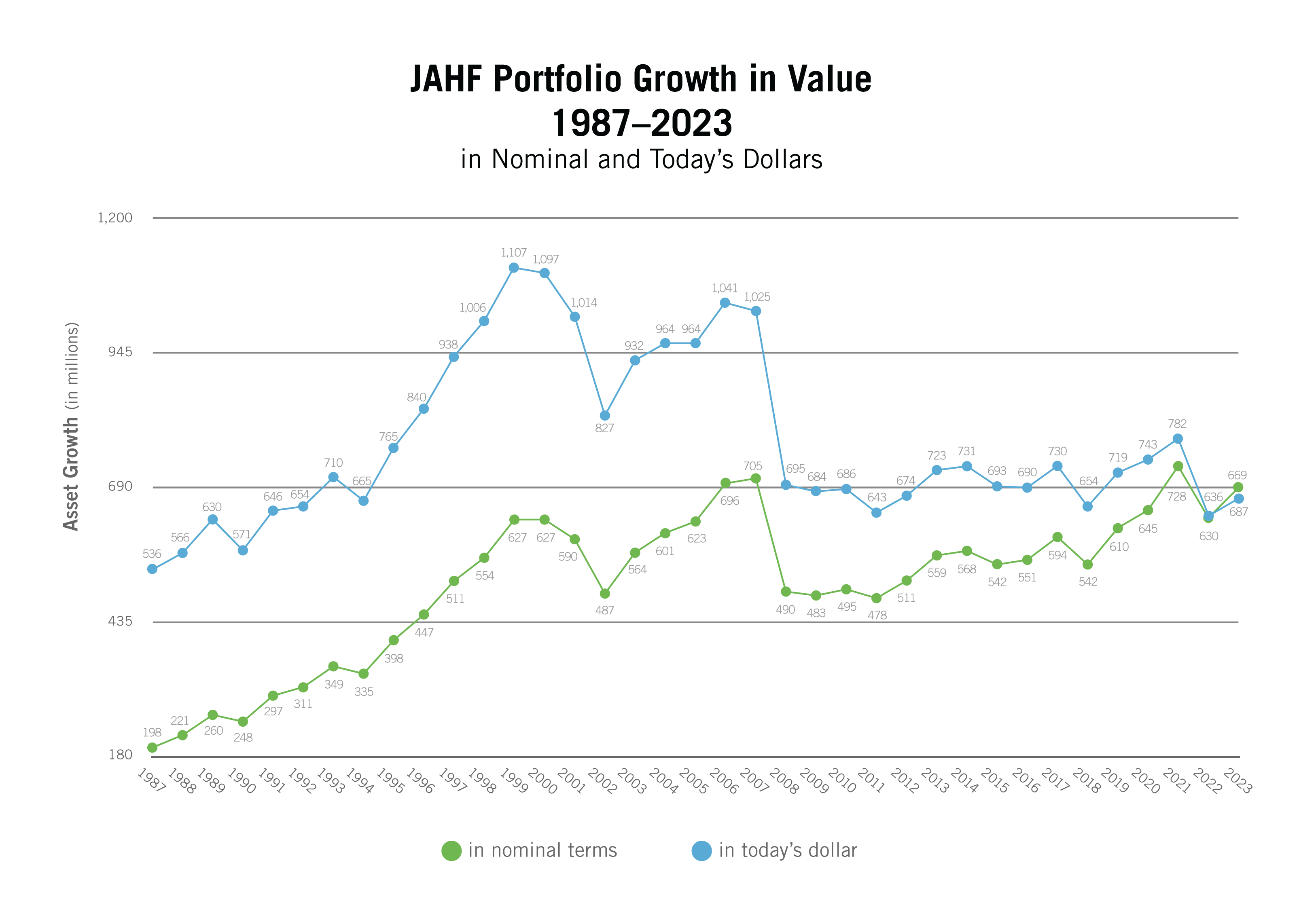
The Foundation’s investment portfolio was valued at approximately $669 million at year-end 2023, reflecting an increase of approximately $85 million before disbursement for grants, administrative expenses and taxes totaling $31 million during the year.
After a challenging year in the financial markets in 2022, both stocks and bonds reversed course and finished 2023 on a strong note. The rally was driven by a combination of factors, including a resilient global economy, better-than-expected corporate earnings, ongoing easing of inflation, and the anticipation that potential interest rate cuts might be on the horizon in 2024. To that end, the U.S. equities—represented by the S&P 500 index—recorded an impressive gain of 26.3%, while international equities—represented by the MSCI ACWI ex U.S. index GD—also performed well and ended the year up 16.2%. Meanwhile, the U.S. fixed-income market, measured by the Bloomberg U.S. Aggregate index, returned 5.5% during the year.
The Foundation’s total portfolio, which is a well-diversified portfolio across various asset classes, reported a strong return of 14.1% in 2023, surpassing the inflation plus spending rate of 8.4%. Its one-year performance was at the top 23rd percentile rank within Northern Trust’s foundation and endowment universe. Excluding private assets, the liquid portfolio yielded a 16.3% gain for the year.
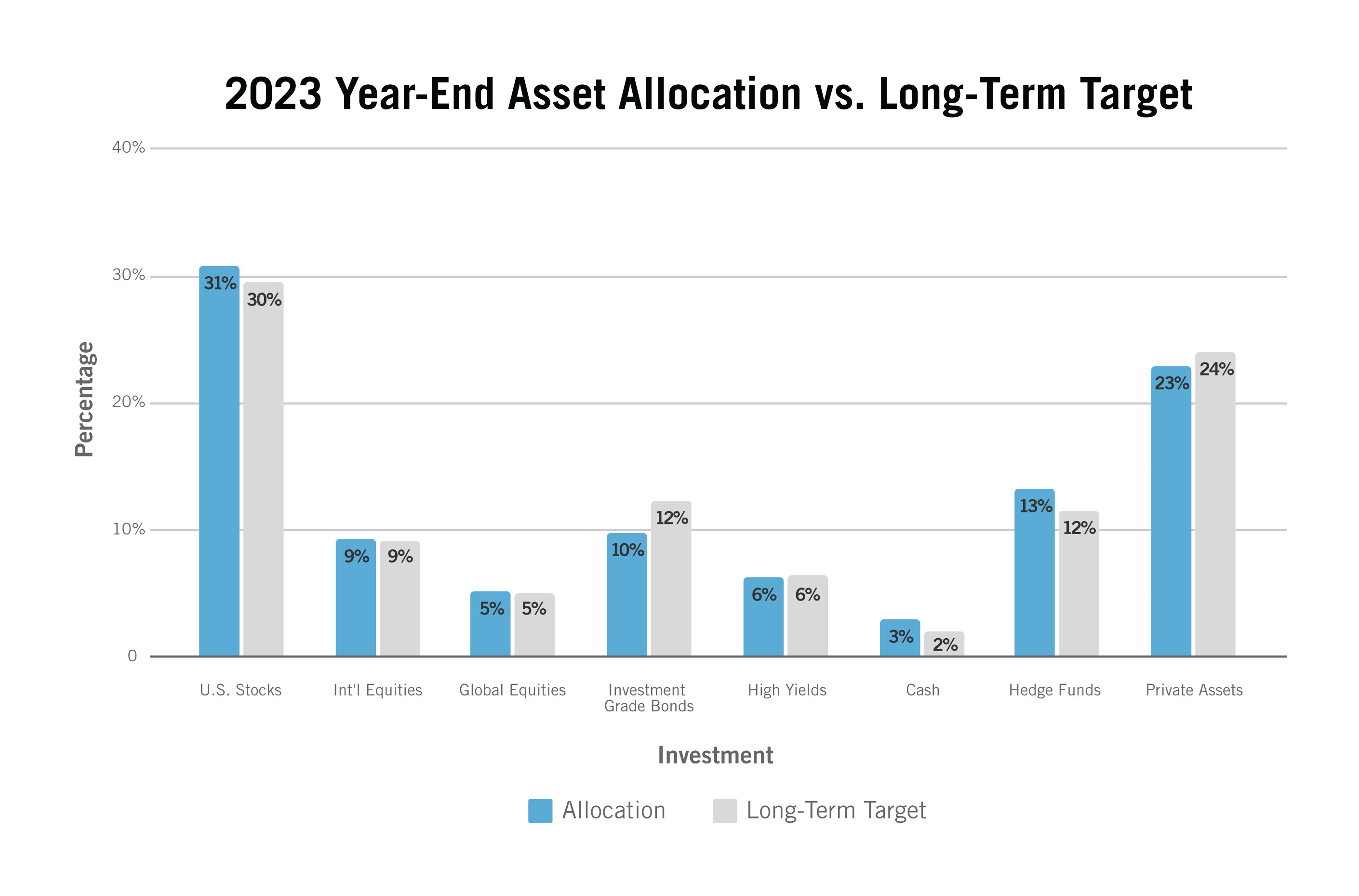
Throughout 2023, the Foundation regularly rebalanced its investments to closely align with its long-term target allocation and adjusted funds within each asset class, in response to market conditions and the Foundation’s spending needs. At year-end, the portfolio’s asset mix consisted of 45% long-only equities, 16% fixed-income, 3% cash, 13% hedge funds, and a total of 23% in private assets. In comparison, the asset composition at the end of 2022 was comprised of 47% long-only equities, 15% fixed-income, 2% cash, 14% hedge funds, and 22% private assets.
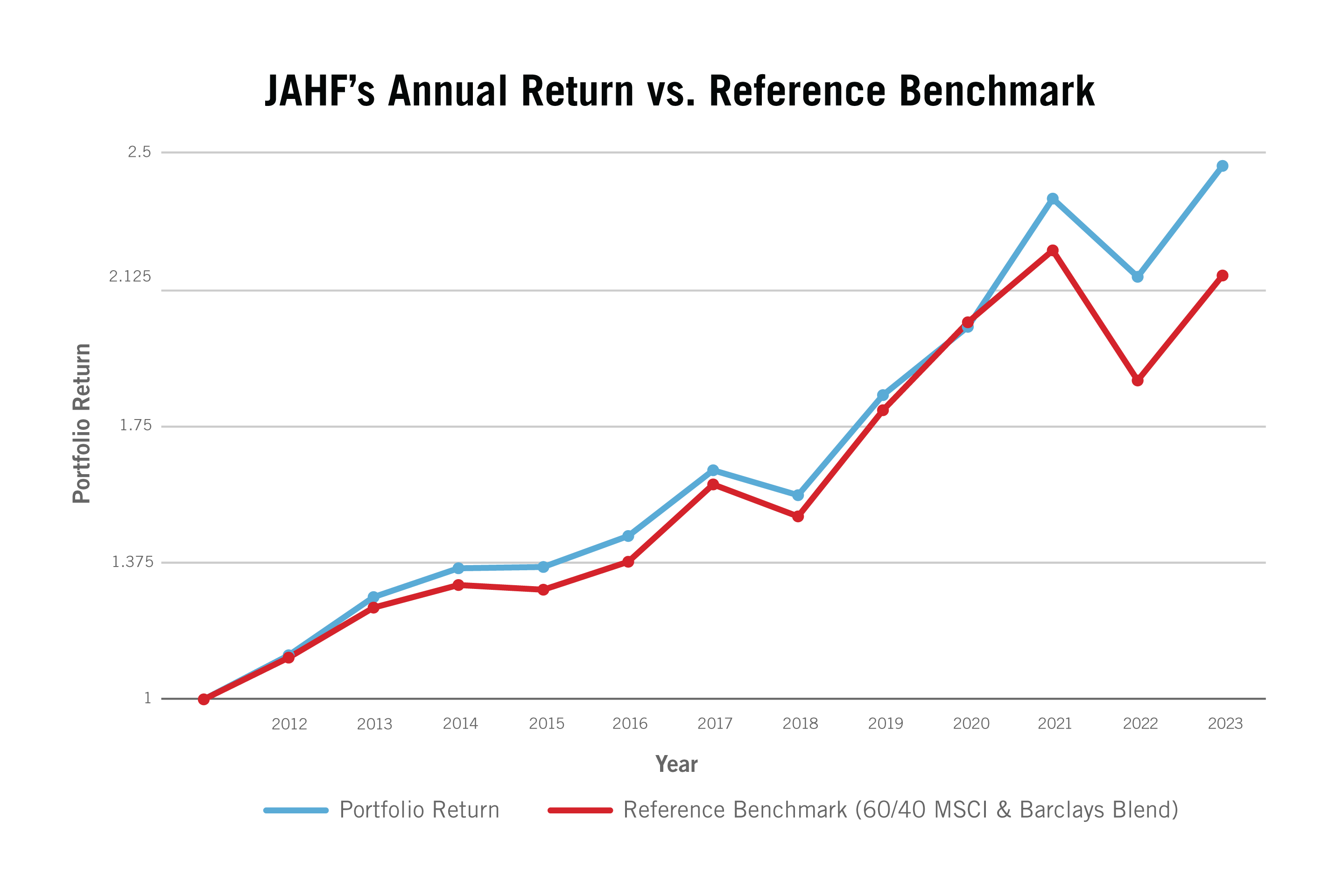
Under Goldman’s guidance since August 2012, despite persistent high inflation in 2021 and 2022, along with an extremely challenging investment environment in 2022 and other turbulence along the way, our disciplined, prudent investment approach has paid off. The total portfolio surpassed the 60/40 Reference Benchmark on a cumulative basis since the end of 2012.
The Foundation’s investment objective continues to be securing maximum long-term total return on its investment portfolio to maintain a strong grants program, while assuring consistent growth of its assets at a level greater than the rate of inflation. We are pleased that the long-term performance of the Foundation’s portfolio—which had delivered an annualized net investment return of 8.4% in the past 36 years—has remained ahead of the average inflation (2.8%) plus spending rate (4.9%) for a total of 7.7% per year. During this period, total spending—inclusive of administrative expenses, grants, and taxes—has amounted to $1.3 billion in today’s dollars, averaging approximately $36 million per year in today’s dollars. Despite spending, the Foundation’s portfolio, estimated at $669 million at the end of 2023, compares favorably to the 1987 year-end value of $198 million, which is equivalent to about $536 million in today’s dollars. In other words, the Foundation has been able to preserve and enhance the real value of its assets (adjusted for inflation), after accounting for all spending.
Heading into 2024, we remain vigilant to a wide range of risks, including the potential for hotter-than-expected inflation data, which may delay the Federal Reserve’s decision to cut interest rates, Israel-Hamas tensions, U.S.-China disputes, North Korea’s missile testing, Iran-Russia nuclear collaboration, and potential impacts of global elections on economics and markets. In this uncertain environment, where higher equity valuations have been primarily driven by a handful of technology stocks, we are confident that our customized strategic asset allocation—designed to ride out volatility and provide resilience in the event of geopolitical disruptions—will continue to enable us to maximize risk-adjusted returns in 2024 and beyond.
The Finance Committee and the Board of Trustees meet regularly with Goldman Sachs to review asset allocation, investment strategy and the performance of the underlying investments. Northern Trust Corporation is the custodian for all the Foundation’s securities. A complete listing of investments is available for review at the Foundation’s offices. Audited financial statements were not completed in time for this publishing but will be available on the Foundation’s website in the summer.
Trustees & Staff
Board of Trustees
- John R. Mach, Jr., Chair
- Elizabeth A. Palmer, Co-Vice Chair
- Earl A. Samson, III, Co-Vice Chair
- John H. Allen
- Ginna Baik
- David Di Martino
- Liam Donohue
- Charles M. Farkas
- Phyllis D. Meadows
- Tripler Pell
- Nirav R. Shah
- Margaret L. Wolff
- John R. Mach, Jr., Chair
- Elizabeth A. Palmer, Co-Vice Chair
- Earl A. Samson, III, Co-Vice Chair
- John H. Allen
- Ginna Baik
- David Di Martino
- Liam Donohue
- Charles M. Farkas
- Phyllis D. Meadows
- Tripler Pell
- Nirav R. Shah
- Margaret L. Wolff
Staff
- Terry Fulmer, President
- Eva Cheng, Vice President, Finance
- Marcus Escobedo, Vice President, Communications and Senior Program Officer
- Rani E. Snyder, Vice President, Program
- Scott Bane, Senior Program Officer
- Amy Berman, Senior Program Officer
- Alexa Cardamone, Office Manager
- Jane Carmody, Senior Program Officer
- JiHo Chang, Program Officer and Senior Technology Advisor
- Clare Churchouse, Senior Communications Associate
- Barline Dambreville, Administrative Assistant
- Ximena Gallego, Communications Assistant
- Melida Galvez, Senior Accountant and Assistant Grants Manager
- Rutuma Gandhi, Accounting Manager
- Abby Maglich, Program Associate
- Julianne McLean, Program Administrator / Travel Coordinator
- Jon Miller, Grants Manager
- Cheryl Phillips, Senior Program Consultant
- Jennifer Phillips, Executive Assistant
- Nancy Wexler, Program Officer
Interns
Elias Berstein, Jessica Huang, Amalia Korniyenko,
Sara Kunkel, Junyue Liao, Quinn Mao, Yiru Pan, Sandra Yu
As of December 2023
- Terry Fulmer, President
- Eva Cheng, Vice President, Finance
- Marcus Escobedo, Vice President, Communications and Senior Program Officer
- Rani E. Snyder, Vice President, Program
- Scott Bane, Senior Program Officer
- Amy Berman, Senior Program Officer
- Alexa Cardamone, Office Manager
- Jane Carmody, Senior Program Officer
- JiHo Chang, Program Officer and Senior Technology Advisor
- Clare Churchouse, Senior Communications Associate
- Barline Dambreville, Administrative Assistant
- Ximena Gallego, Communications Assistant
- Melida Galvez, Senior Accountant and Assistant Grants Manager
- Rutuma Gandhi, Accounting Manager
- Abby Maglich, Program Associate
- Julianne McLean, Program Administrator / Travel Coordinator
- Jon Miller, Grants Manager
- Cheryl Phillips, Senior Program Consultant
- Jennifer Phillips, Executive Assistant
- Nancy Wexler, Program Officer
Interns
Elias Berstein, Jessica Huang, Amalia Korniyenko,
Sara Kunkel, Junyue Liao, Quinn Mao, Yiru Pan, Sandra Yu
As of December 2023
2023 Annual Report